
Did you know that the quality of your air conditioner can not only affect your sleep quality, but also your breathing? Like so many things with health (and life), it’s all interconnected.
It’s been estimated that around 2.8 million people in Australia are living with asthma, and that the condition was the leading cause of disease burden in children under 10. While many asthma sufferers experience the worst of the disease during their waking hours, many are also impacted by it at night when they’re trying to get a good night’s sleep. In fact, it’s been found that 1 in every 3 people with asthma have reported disturbances in their sleeping patterns, which can unfortunately lead to worsening symptoms, a lower quality of life, and even a greater reliance on medical care. But a vital factor that is often overlooked by asthma sufferers is the degree that their home environment can impact their ailment; especially when it comes to the air quality that their air con unit is pumping through their home.
That’s why we here at Total Electrics & Air Conditioning are proud to support this year’s National Asthma Council Australia’s Sensitive Choice program so we can help raise awareness about the significant connection between asthma and sleep quality.
The Connection Between Asthma & Sleep Quality
The connection between quality of sleep and asthma is more intrinsic than a lot of people realise.
Some of the more common asthma symptoms that are known to affect sleep cycles include:
- A constant wheezing (or whistling) when you breathe.
- A persistent cough that perseveres through the night or worsens when you’re lying down, thereby negating the opportunity to achieve restful sleep.
- A shortness of breath that makes it difficult for you to find a comfortable sleeping position, or that causes you to wake up struggling for air.
- A tightness is the chest, or the feeling of a pressure on your chest that leads to discomfort and/or laboured breathing.
These common symptoms can, of course, strike any time of the day, but it’s when they occur throughout the night or in the early morning that they risk reducing the quality of your sleep.
Regrettably, this can also lead to a bit of a vicious cycle. As the worsening asthma results in your poor sleep, your poor sleep then worsens the asthma.
A spiral such as this can lead to:
- Inflamed asthma symptoms, such as coughing and wheezing, which make it even more difficult to fall asleep and stay asleep throughout the night.
- A decline in health, owing to the poor quality of the sleep, which leads to a weakened immune system, thereby reducing your body’s capacity to mitigate inflammation.
- Further intensified asthma symptoms, owing to your body’s weakened immune system, which can prove harder and harder to effectively manage.
If you’re one of many asthma sufferers who finds themselves waking up in the middle of the night with impaired breathing, it may well be a clear sign that your asthma is affecting your sleep. When you’re sleeping, your breathing should ideally be healthy and uninterrupted, so if that’s not the case for you, then drastic steps should be taken as soon as possible.
How Your Indoor Environment Plays a Key Role
Not surprisingly, the environment where you sleep has a major impact on how you sleep. Your bedroom is filled with a multitude of variables that can impact how your body responds through the night, and unless the airflow and filtration in your bedroom is adequate, these irritants can build up quickly and harmfully.
Some common asthma triggers found within the bedroom may include:
- Dust mites — Microscopic creatures that thrive in warm, humid environments, dust mites are commonly found in mattresses, pillows, and bedding. Their waste particles can become airborne and, when inhaled, may trigger asthma symptoms during the night.
- Pollen, eg. the tiny particles released from flora such as nearby trees, grasses, and plants. It is all too common for pollen to make its way indoors; sometimes it is carried in on our clothing and hair, sometimes it is blown in via open windows and doors. Regardless of how it gets in, pollen can wreak havoc on an asthma sufferer’s senses, especially during high pollen seasons.
- Mould spores, which often develop in areas of the bedroom that are prone to poor airflow or dampness; this can include windowsills, walls, and under (or sometimes within) bedding. Once mould spores have become airborne, they can irritate our airways and very easily trigger an asthma response.
- Poor ventilation; stale, stuffy air provides little to no relief for asthmatic airways, so if your your bedroom lacks adequate airflow, it is likely going to be an easy target for airborne irritants such as dust, pet dander, and/or indoor pollutants, which is going to make breathing all the more difficult throughout the night.
- Fluctuating temperatures; erratic and sudden changes in the temperature can quickly turn your nice warm room into a nasty cold one, which is often bad news for asthmatic airways. Breathing cold, dry air is a well-established way to trigger an asthmatic reaction such as coughing, wheezing, and/or tightness in the chest.
How Air Conditioning Can Support Better Sleep & Asthma Control
Though air conditioning is often erroneously thought of as an expendable luxury, it actually plays a vital, and in certain cases, indistinguishable role, in creating a healthy indoor environment for asthma sufferers and others who are prone to respiratory issues.
A high quality air con system can help:
- Filter Airborne Irritants: Modern air conditioning units can help mitigate allergens such as dust, pollen, and various other particles known for triggering asthma symptoms.
- Maintain Temperature Consistency: Consistent temperatures can help asthma sufferers reduce the airway irritation that’s often caused by the changes in the atmosphere outside.
- Improve Air Circulation: Any given bedroom is in danger of accumulating stale and stagnant air, but this can be helped with the advent of airflow.
- Assist with Humidity Control: A stable room humidity can do wonders in preventing the growth of mould, thereby improving the room’s air quality.
Each of these steps (especially in conjunction with each other) can contribute to a bedroom that is more supportive of respiratory health and conducive to restful sleep.
Improve Your Home’s Air Quality with Daikin Systems
A healthier sleep starts with healthier air quality in your bedroom, so it is thereby imperative that you do what you can to mitigate the indoor triggers that are known to trigger asthmatic attacks.
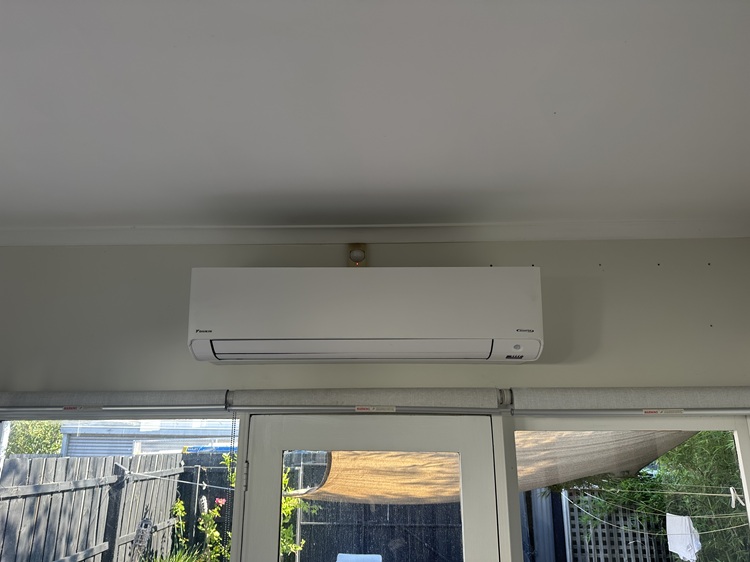
If you’re looking to optimise the air quality in your household, we recommend a Daikin split system air conditioner; a high quality system which is designed to efficiently heat or cool individual rooms in your home while also filtering the indoor air and assisting with circulation. In addition to this, advanced filtration systems (or similar air purification devices) can help take care of common air pollutants/allergens such as dust, odours, mould spores, and pollen.
Take the Next Step Towards Better Sleep
Ultimately, poor sleep is not sustainable, and it can make existing respiratory issues worse; but both sleep and air quality can be improved upon with a quality air con system; and if you have a quality air con system that you suspect is not working as it should, get in touch with Total Electrics & AC to find out whether it needs a service or an upgrade. We pride ourselves on our quality products and excellent customer service, and we look forward to optimising the airflow/ventilation of your home. You can browse heating and cooling options here, or check out the Daikin air conditioner here.